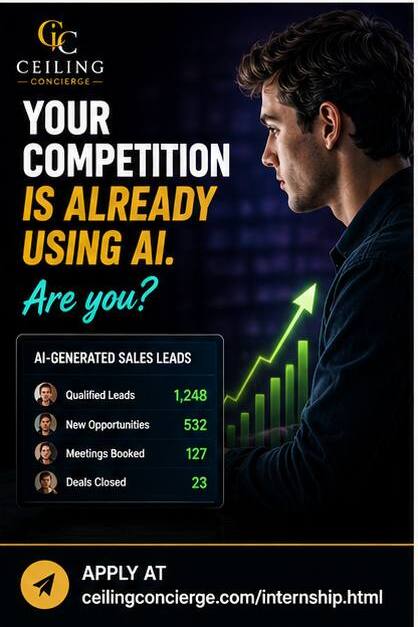
Right now, while you're reading this, someone in your graduating class is shipping their third blog post of the day. Drafted with Claude. Edited by hand. Published to a personal portfolio site they built with Cursor in a weekend.
They have a Notion dashboard tracking every internship application, with auto-generated cover letters. Their LinkedIn has 47 thoughtful posts about the future of their industry, each one analyzed by Claude before posting for clarity and tone.
They built a personal CRM that automatically reaches out to alumni in their target companies. The CRM was built by Claude, written in Python, runs on a Heroku free tier. They've had 11 informational interviews this semester.
You don't know who this person is. They don't post their workflow online. They're not bragging about it on TikTok. They're just quietly building the most aggressive job-search advantage in the history of college recruiting.
Are you?
The Quiet AI Adoption
Here's a stat that should scare you a little. According to recent surveys of college students:
- 92% say they have used ChatGPT at least once.
- 61% say they use it weekly.
- 17% say they use it daily.
- 4% have built or modified an AI workflow that produces work for them automatically.
Now look at hiring data. In 2025, internships that explicitly listed "AI tools" as a skill had 3x the application volume. Salaries for entry-level marketing, sales, and ops roles that required AI fluency averaged 24% higher than non-AI equivalents.
That gap is widening every quarter.
The companies that are growing fastest in 2026 are doing it with smaller teams. Smaller teams mean fewer entry-level openings. Fewer entry-level openings means each opening becomes more competitive. And the deciding factor in those competitive races is, increasingly, AI fluency.
The Fortune 500 Adopted It Quietly
It's easy to assume that AI adoption is a startup thing. It's not. The largest companies in the country are quietly retooling.
Procter & Gamble has internal Claude deployments across all marketing teams. Their entry-level brand managers are expected to use AI for consumer research summaries on day one. Anyone who can't is at a disadvantage.
Bank of America deployed an internal AI assistant called "Erica for Employees" to over 200,000 staff. Customer-facing roles use it for compliance, drafting, and customer-question lookups.
Salesforce hired 1,000 fewer engineers in 2025 than 2024, citing AI productivity gains. Same company that built the world's largest CRM. Same company that's hiring fewer juniors. Coincidence?
Walmart. Coca-Cola. Anthem. Disney. Every name brand you can think of has rolled out internal AI tools in the past 18 months. The expectation that you can use these tools is now baked into job descriptions, even when not explicitly stated.
Your competition is using AI. The companies you want to work for are using AI. The only question is whether you are.
The Sales Numbers Don't Lie
Let's look at concrete output differences from people in similar roles, with vs. without AI workflows:
| Metric | Without AI workflow | With AI workflow |
|---|---|---|
| Cold emails sent per week | 50-100 | 400-800 |
| Prospects researched per day | 5-10 | 40-75 |
| Qualified leads added to pipeline per month | 20-40 | 120-250 |
| Meetings booked per quarter | 10-25 | 60-130 |
| Closed deals per quarter | 2-5 | 15-30 |
This is not "AI is mildly helpful." This is "AI is 5-10x as productive as the non-AI workflow." Anyone hiring is going to notice the difference.
What to Do About It (Today)
If you've read this far and felt a little anxious, good. That anxiety is the right reaction. Here's how to convert it into action.
This week: Sign up for ChatGPT Plus or Claude Pro. $20/month. Use it daily for everything you can. Treat it like a teammate you're collaborating with.
This month: Pick one workflow you do regularly (job applications, class research, study prep) and build an AI-augmented version of it. Get the time down by half.
This semester: Take a paid internship that uses AI tools daily. Real projects, real feedback, real money. The fastest learning happens when other people depend on the output.
This year: Build a portfolio that demonstrates your AI fluency. LinkedIn posts. Public side projects. Case studies of things you've shipped. Make it impossible for a hiring manager to mistake you for someone who hasn't engaged with the tools.
The Last Thing
The window where "AI fluency" is a competitive advantage will not last forever. By 2028, expect it to be table-stakes. Everyone you compete against will have learned the basics. The advantage will shift to people who can build with AI rather than just use it.
Right now, we are in the rare phase where being early is enough. If you commit the next 90 days to becoming AI-fluent, you will land in the top 10% of your graduating class for hiring desirability.
If you don't, you will be competing for the leftover openings against everyone else who didn't.
Your competition is already using AI. Are you?
Ready to Build Your Future?
Apply for the Ceiling Concierge AI-First Internship. Real projects. Real pay. Real skills the classroom never taught you.
📧 Send your resume to info@ceilingconcierge.com
Or visit ceilingconcierge.com/internship.html